
- Home
- About Us
- Services
- Who We Serve
- Home service trades
- Specialist trades
- Exterior and remodeling
- Outdoor and site work
- Client Reviews
- Book a Strategy Call
Book More Tree Removals From Google Ads
The minute a limb comes down, Google Ads can make your crew the first name a homeowner sees. The catch is making it pay: keeping your budget off tire-kicker clicks, showing up for the big removals instead of the quick trims, and not trusting the account to someone who has never priced a crane job. That is the work we do, and home service is the only industry we serve.
- ✓Each click traced to the job it booked, so you see which ads really fill your calendar
- ✓Spend pointed at big removals, not small trims that barely pay for fuel
- ✓Managed by a team that works only in home services, so budget isn't burned on junk searches
One 15-minute call. You get a clear plan built for your service area.
Next step: we'll text or call to schedule your 15-minute strategy session.
Where jobs slip away
Where Is Your Google Ads Spend Slipping Away?
Spot the problem your tree company is dealing with, and see where we look first.
Visitors tap your ad, then bounce
- 1Does each ad land on a page about that exact job, or just on your homepage?
- 2On a phone, can visitors see your number and a call button without scrolling?
- 3Can they see real job photos, your reviews and the next step?
Our first moveA dedicated page per service, with the phone number up top
Build My Google Ads Planor phone us at (555) 010-0000
You're paying for searches that will never hire you
- 1Do your ads appear for "how to", "hiring", "cheap" or towns outside your area?
- 2How long since anyone reviewed your search terms list and blocked the bad ones?
- 3Is a $200 trim getting the same bid as a $5K removal?
Our first moveJunk searches blocked at launch, and bids aimed at the jobs you actually want
Build My Google Ads Planor phone us at (555) 010-0000
Google reports conversions. Your phone tells a different story
- 1Can you link every call to the exact ad and search term that drove it?
- 2Do you track what a booked job costs, or only what a click costs?
- 3Is the Google Ads account in your name, or your agency's?
Our first moveTracking on every ad, inside an account you own
Build My Google Ads Planor phone us at (555) 010-0000
Good lead, lost job: a competitor got back to them faster
- 1When a homeowner reaches out at 7 p.m. or while you're on a job site, how long before someone gets back to them?
- 2Does each lead get a phone call, a text and a same-day follow-up, or a single try?
- 3Are you buying leads three other tree crews also bought, then fighting over price before the first visit?
Our first moveAn instant text to each new lead, same-day follow-up, and leads nobody else gets
Build My Google Ads Planor phone us at (555) 010-0000
Inside your report
How We Build Your Google Ads Campaign
Nothing hidden. Here is what we set up and manage inside your Google Ads account, and every piece of it exists to turn ad spend into tree jobs on your calendar, not charges on your card.
Campaigns Built Around Tree Work
- ✓Ready-to-hire searches such as stump grinding, emergency tree service, tree removal and tree trimming near me, each in its own tight ad group with a landing page made for that one job.
- ✓Each job type gets its own ad and message.
200+ Junk Searches Blocked at Launch
- ✓Searches with "free", "jobs", "how to", "DIY", "salary", "rental" or "cheap" are blocked before launch, plus many more.
- ✓Self-run tree accounts often go live with only a handful of negatives.
- ✓Left open, that gap quietly drains your budget.
Storm and Emergency Coverage
- ✓Round-the-clock emergency campaigns with bids that rise as severe weather moves in, so you catch storm calls, which tend to book much faster than routine work.
Ads Aimed at the Zip Codes You Want
- ✓Zip code targeting, so the budget stays in neighborhoods worth sending a truck to and out of the ones that only drain it.
Call Tracking and Lead Grading
- ✓Each call, form and click traced to the keyword and ad behind it, so you can see which campaigns land big removals and which only bring in small trim requests.
Retargeting for Homeowners Still Deciding
- ✓People who browsed your pages and left without calling see your ads again later.
- ✓That second look wins back estimates cold ads miss, and it costs far less per view.
Swipe through all 6 parts
Build My Google Ads Planor phone us at (555) 010-0000
Your live dashboard
Google Ad Clicks,
Turned Into Booked Tree Jobs
Your ad is the first result a homeowner sees after typing "emergency tree removal near me". We trace each click back to the exact keyword and ad that produced the call, which lets the budget follow real removals and drop the time-wasters. Below is the kind of dashboard and phone app you use to watch it happen.
See How You'd Book My Crews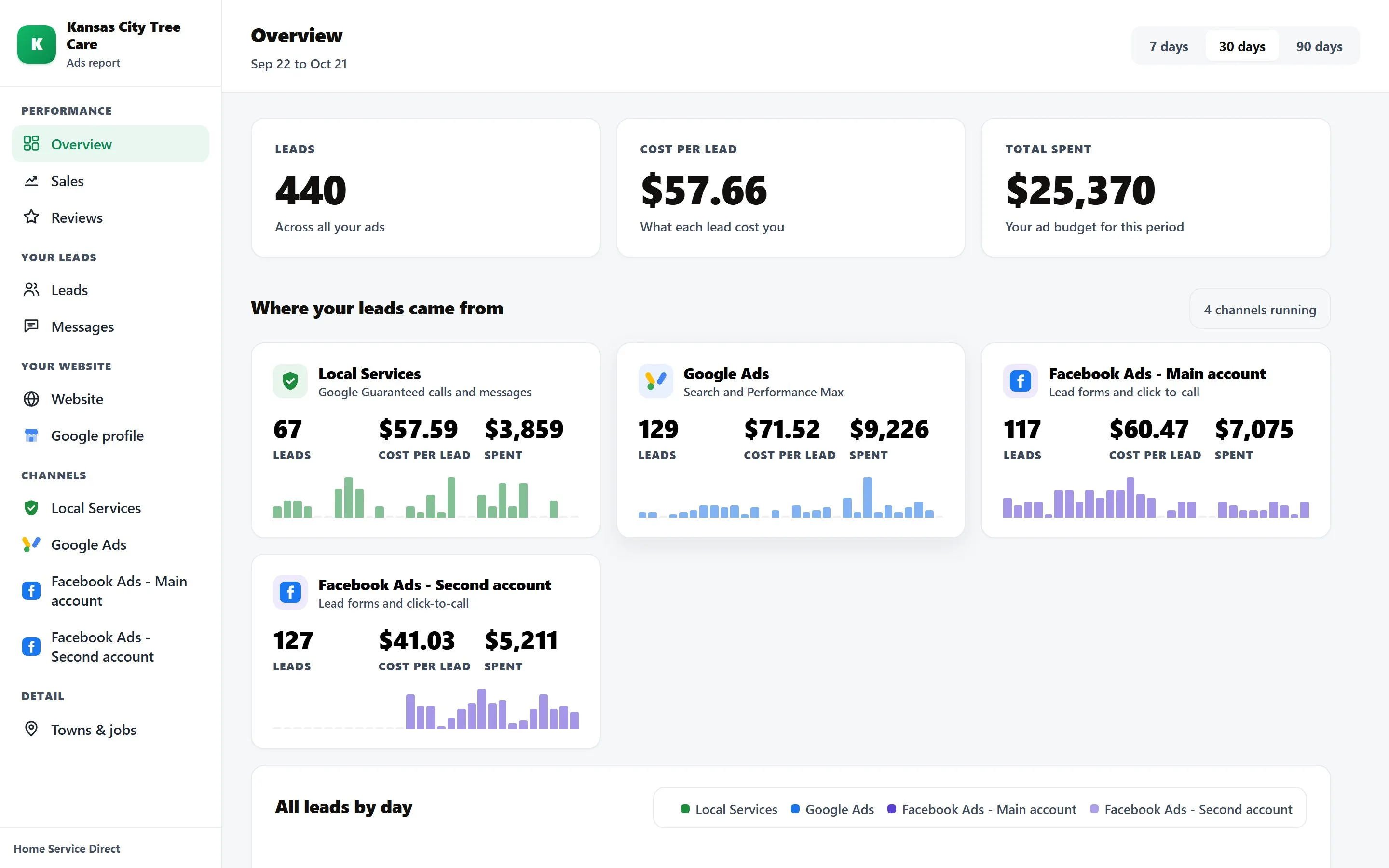
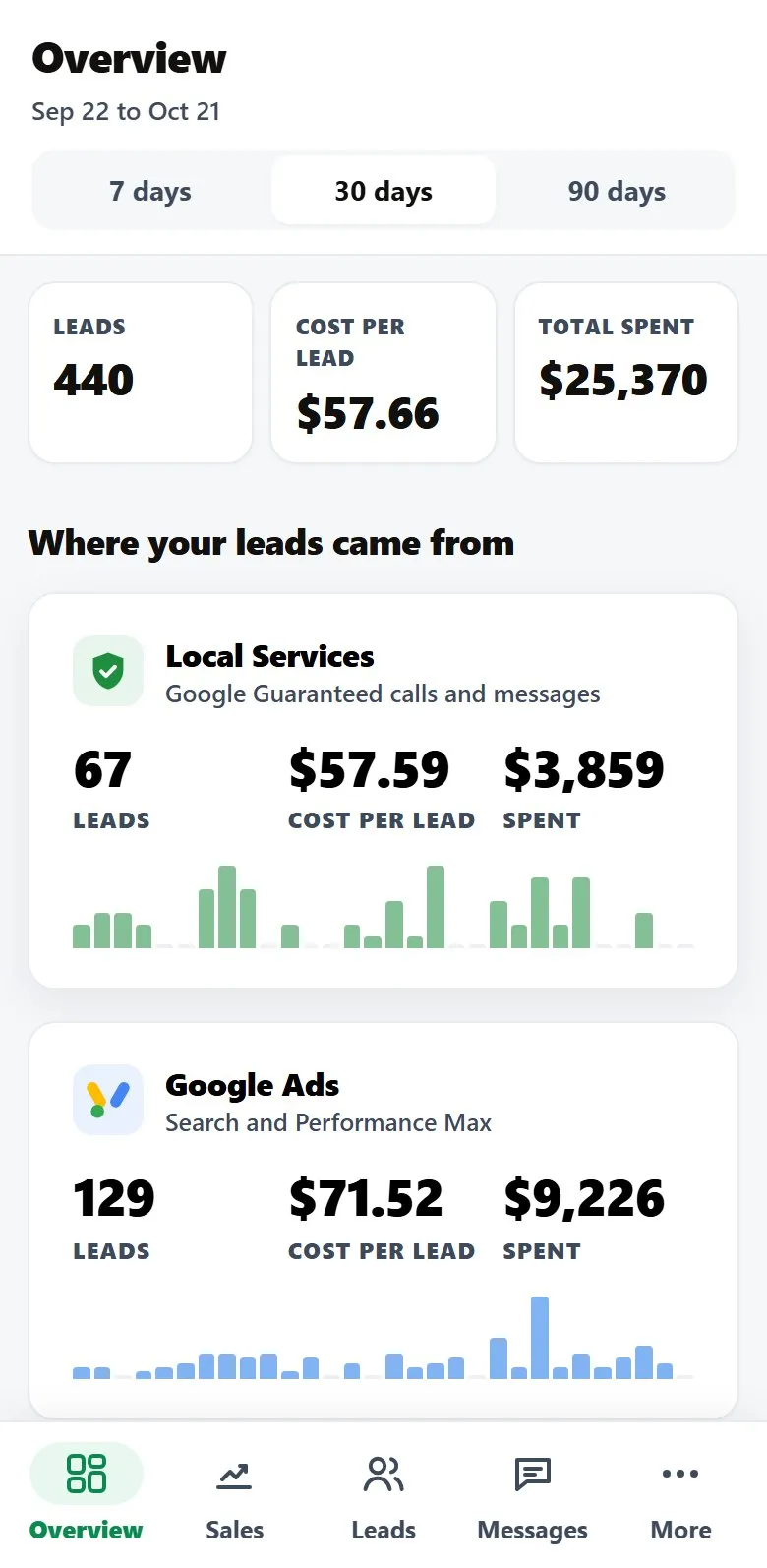
Example dashboard and phone app for a 30-day period. Sample data, shown so you can see the layout.
We point spend at searches that come from real problems: a dead oak leaning toward the house, storm debris across the driveway, a removal that needs a crane. Your ad appears when someone is ready to hire a crew, not while they watch chainsaw videos. That means larger tickets, better close rates on estimates and real revenue booked.
An emergency removal search might cost you $48 and turn into a $5K oak takedown, and you should be able to see that happen. We tie each call, text and form to the ad, keyword and zip code it came from. You learn which dollars book work and which leak, and the budget moves to where the money is.
There is no three-month planning phase. Your tree campaigns go live in the first week, so the next time high winds drop limbs on roofs across town, yours is the number homeowners dial. Other agencies are still scheduling kickoff meetings.
Swipe through all 3 points
Side by side
Your Google Ads Options, Compared. Only One Keeps Crews Busy.
There are three ways to handle Google Ads: do it yourself, hand it to an agency that serves every industry, or use a team that works only in home services. Here is how each one plays out for a tree business.
Vanguard Home Services Marketing
- Tree Keywords and Negatives
- ✓200+ at Launch
- Job-Specific Landing Pages
- ✓One Per Service
- Spend Focused on Big Jobs
- ✓Big Jobs First
- Tracking Behind Every Lead
- ✓All of Them
- Tree Service Know-How
- ✓Tree-Focused
- Google Ads Account in Your Name
- ✓Yours to Keep
- Commitment
- ✓Monthly Terms
Doing It Yourself
- Tree Keywords and Negatives
- ~A Few
- Job-Specific Landing Pages
- ✕Just the Homepage
- Spend Focused on Big Jobs
- ~If You Find Time
- Tracking Behind Every Lead
- ~Spotty
- Tree Service Know-How
- ✓Knows Tree Work
- Google Ads Account in Your Name
- ✓Yours to Keep
- Commitment
- ✓Month to Month
A Catch-All Agency
- Tree Keywords and Negatives
- ~Canned List
- Job-Specific Landing Pages
- ~Usually the Homepage
- Spend Focused on Big Jobs
- ✕Rarely Adjusted
- Tracking Behind Every Lead
- ✕Just Clicks
- Tree Service Know-How
- ✕Every Industry
- Google Ads Account in Your Name
- ✕The Agency's
- Commitment
- ✕Long Lock-In
Swipe through all 3 options
Why Self-Run Google Ads Tend to Waste Budget
The usual setup is a short keyword list, a few negatives and the homepage as the destination. Clicks arrive, but many come from people typing "free", "how to" or "DIY", and the homepage never gives them a reason to pick up the phone.
Researching keywords, blocking hundreds of junk searches, keeping ad groups tight, building a page per service and adjusting bids every day takes hours each week. Few owners running crews have those hours to spare. The Google Ads accounts that book work are the ones someone is tuning all the time.
Tree Clicks Are Not All Equal
A crane removal, a storm-damaged tree on a roof or a large takedown can run $2,500 to well over $5,000. Routine pruning brings in a few hundred dollars. Both clicks cost roughly the same, so the jobs you aim at decide whether the account turns a profit.
Keywords, bids and service-area settings all lean toward those higher-value searches, so the money chases removals and storm work that carry the month instead of $200 stump jobs.
or phone us at (555) 010-0000
Why work with us
How We Get You Ranked Above Everyone on
Google Ads
Tree service Google Ads need someone watching them every week. We set up the campaigns, write every ad, shut off wasted spend, create the landing pages and connect each call to the job it became, so the work that pays is what rings your phone. Home service is the only industry we work in.
Tight Campaigns for Each Tree Service
Campaigns follow the way homeowners search for tree help: removal, emergency, trimming, stump grinding. Each sits in its own ad group with an ad and a page that match the job. We skip the broad "tree service" bucket that spends money on the wrong people.
200+ Blocked Searches to Stop Wasted Spend
Searches containing "free", "salary", "how to", "DIY", "cheap" or "jobs" are shut out on launch day, along with a long list of others. Owners who run their own ads usually block only a few. That gap adds up to thousands paid for clicks from people who were never hiring.
Landing Pages Designed to Get the Call
A click only pays off if the visitor picks up the phone. Your traffic goes to a page focused on one job, showing your reviews, the towns you cover and a phone number that's impossible to miss, so more clicks become estimates on your calendar.
Spend Focused on Big Removals
Spend gets checked daily and moved toward the keywords, neighborhoods and times of day that produce removals, while small trim clicks get less. Your budget stays the same. You just get more of the large jobs that keep crews paid.
Storm and Emergency Bidding
After a storm, emergency tree searches jump for a day or two. Our around-the-clock emergency campaigns raise bids as the weather turns, so your ads catch that wave while other crews are still asleep.
Tracking That Shows Which Ads Booked Jobs
Every call, click and form is linked to the ad and keyword behind it. You can see which campaigns produce $5,000 removals and which produce $150 trim calls, and we shift budget to the ones that earn.
Swipe through all 6 reasons
The process
Three Steps to a Fuller Schedule
After every storm, the big removals go to whichever crew the homeowner reached first. These three steps make that crew yours, instead of the one hearing about the job a week later.
Book Your Call
If your ads are burning money on junk traffic, or you have not tried Google Ads yet and would rather skip the expensive lessons, talk with a team that works only in home services. Fifteen minutes, no slide deck.
Leave With a Plan
We study how often people near you search for removals and pruning, the realistic price of a click and of a booked job in your area, and the keyword and negative lists your account will launch with. You hang up knowing where the next removals will come from, with a plan shaped around your towns instead of a template.
Land Bigger Removals
Ads go live, calls come in, estimators stay busy and crews book out for weeks. The $5K takedowns and crane jobs start landing with you, and you become the tree company people in your area call first.
Swipe through all 3 steps
Pick a Time for My Callor phone us at (555) 010-0000
FAQ
Tree Service Google Ads: Your Questions Answered
What should a tree company budget for Google Ads?
Many tree companies start in the low thousands per month in ad spend, plus management. The right figure comes down to how competitive your area is and how many trucks you need to keep busy, so we size it to you instead of selling a package.
Budget matters less than cost per booked job. If $200 in clicks turns into a $5,000 removal, that is a strong month. We manage toward that number, so every dollar can be traced to work on the schedule.
I tried Google Ads once and lost money. Why would this be different?
Owners tell this story a lot, and the cause tends to be the same short list: a loose keyword list, too few junk searches filtered out, everything crammed into one campaign, and clicks sent to a homepage that never asks for the call.
We rebuild the account with tight ad groups for each tree service, a full negative list from launch and landing pages made to get the call. Google stays the same. The setup is what separates booked jobs from wasted spend.
How soon can Google Ads bring in jobs?
Search ads start showing as soon as they're approved, so first calls often come in within days. Unlike SEO, there's no three-month ramp-up before the phone rings.
The first few weeks are for tightening: cutting search terms that waste money and moving budget toward keywords that book removals. By the end of month one, the account should be settling into steady, predictable numbers.
How do you stop tire-kickers from eating my budget?
We start with a long negative keyword list on launch day, shutting out searches with "jobs", "free", "salary", "DIY", "cheap" and "how to" from people who will never hire you. After that, we read your search terms weekly and block new junk as it appears.
We also narrow targeting to your zip codes and put the strongest bids on people searching for removals and urgent storm help, so your money goes after jobs that pay the crew and not the ones that waste an afternoon.
Is the Google Ads account mine?
Yes. It's set up in your name and stays with you if we stop working together. We run it day to day, but your account, your data and your campaign history are never held back from you.
Many agencies build campaigns inside their own accounts, so you leave with nothing when you cancel. We don't. Our terms are month to month, and everything we build belongs to you.
My last agency let me down. Why would you be different?
Home service is all we do. We already know the keywords, the seasons, the gap between a crane job and a hedge trim, and how one storm can flip demand overnight. An agency that serves every industry learns your trade with your budget.
There's no long contract, the account is in your name, and each call is tied to the ad that produced it. You can check what your budget is doing yourself instead of relying on our say-so.
Explore more
Explore More Tree Service Marketing Services
Tree Service Leads
Exclusive tree leads sent straight to your phone each monthRead moreTree Service Local Service Ads
Calls from the Google Verified spot, sent only to youRead moreTree Service SEO
Climb Google Maps in the towns you serveRead moreSwipe through all 3 pages
Next step
Ready to Keep Your Tree Crews Busy?
Take a 15-minute strategy call. You will see how many people in your zip codes are searching for tree work right now, and how to win more of those jobs.
After You Book
We pull removal search volume for your zip codes, look at the tree companies bidding against you and pinpoint neighborhoods with large, mature trees.
We walk through the call volume to expect, what a booked removal should cost through Google Ads, and how much work that puts on the schedule.
Your ads launch and the phone starts ringing. No long contract, and you can cancel with 30 days' notice.
No Long Contracts: we keep your business by keeping your phone ringing. No long-term contract, no setup fees, cancel with 30 days' notice, and the account and every lead stay yours.
One 15-minute call. You get a clear plan built for your service area.
Next step: we'll text or call to schedule your 15-minute strategy session.
How Tree Service Google Ads Turn Into Booked Work
For a tree company, Google Ads is the quickest way to reach homeowners at the moment they search. Set up well, tree service PPC brings in ready-to-hire calls every day. Set up poorly, pay-per-click quietly spends your money on visitors who never become jobs. Good management closes that gap, and this guide shows you how.
$2,000 in Clicks, Two Jobs Booked
Plenty of tree owners describe the same first attempt. They switched on Google Ads with a handful of keywords and hardly any negatives, pointed every click at the homepage, and a month later had spent two thousand dollars for a couple of small trims. Google was not the issue. The build was. Set up correctly, that same account is the most dependable way to get a homeowner with a dying oak on the phone with you right when they want to hire. Here is what changes.
Why Bargain Clicks Usually Cost You the Most
The most common mistake in self-run tree accounts is chasing cheap clicks on wide-open terms such as "tree work" or "tree service", because the price per click looks small. Those terms attract everybody at the same price: the homeowner pricing out a big removal and the person trying to learn how to cut a limb on their own. A big share of the budget ends up with people who never planned to hire anyone.
Someone typing "emergency tree removal near me" will cost you more per click, sometimes much more. They also have a real problem and the phone already in hand. An expensive click that books removals beats a cheap one that wastes your afternoon, every time. The price of a click is the wrong thing to watch.
Bottom line: quit chasing low click prices. A bargain click that never turns into a job is pure waste.
Negative Keywords Make or Break a Tree Budget
The biggest difference between a tree account that books work and one that leaks money is its negative keyword list. Negatives tell Google which searches should never trigger your ad. Skip them, and a "tree removal" ad will show for "tree removal jobs", "how to remove a tree", "free tree removal", "tree removal salary" and plenty of other dead ends.
Owners who manage their own ads often have a few negatives at most. We launch with a long list that shuts out searches with "training", "salary", "free", "rental", "DIY", "jobs" and "cheap", plus many more from people who will never be customers. Every week we read the real search terms and block new junk. That routine on its own can trim waste sharply, and the savings go back into clicks that book.
Ignore Cost Per Click. Watch Cost Per Booked Job.
The ad platform puts cost per click front and center, but it's the wrong target. The figure to manage your business by is cost per booked job. To find it, track clicks to calls, calls to estimates, and estimates to signed contracts.
Here is the math. You spend $1,000, get forty clicks, ten people call and four book. That works out to $250 in ads for each booked job. If the average removal nets $1,800, that $1,000 just produced $7,200 in work. Bargain clicks that never become calls leave you with nothing. Grade a campaign on the cost of each booked job rather than each click, which only works if you can follow every lead from search to schedule.
The Ad Earns the Click. The Page Earns the Call.
The error nearly every DIY account makes is sending paid traffic to the front page of the site. That page is trying to serve every visitor at once, and someone with a limb through the gutter will not dig around for your number. Most leave, and you paid for each of those visits.
A click pays off only if the page behind it gets a phone call. That takes a separate page for each service, written around that search, with your reviews, the towns you cover, a real photo of your crew at work and a phone number nobody can miss. Send the same traffic to a page designed to convert and far more of those visits can become estimates. The ad brings the visitor. The page wins the job.
Quality Score and the Ad Auction: Ranking Higher for Less
Every search triggers an auction that decides where ads appear, and the highest bid does not automatically win. Google favors ads that fit the search and lead to a fast, relevant page. Google calls that grade Quality Score, and it lets a well-built tree company rank above a careless competitor while paying less for each click.
This is why we group campaigns tightly by service, repeat the search phrase in the ad copy and send the click to a page that matches. When search, ad and page agree, Google lowers what you pay to hold the top spot. A loose, all-in-one campaign does the reverse and makes you overpay just to be seen. The structure is not extra paperwork. It is how you reach the top without draining the budget getting there.
Storm Season Pays the Bills. Bid for It.
Tree work does not come in a steady stream. It surges after storms, and those emergency removals, often several thousand dollars each, can make the whole month. The crews that win them have ads that ramp up as the wind picks up, not ads someone remembers to boost two days later.
So we run emergency campaigns around the clock with bidding tied to the weather. When conditions turn, the ads push harder for urgent calls that tend to book fast. When things settle, they ease back and stop paying storm prices for calm-week clicks. Spending the same amount every week of the year hands the best work to someone else.
Without Call Tracking, You're Guessing What Worked
Without knowing which ad brought in the crane job, you are guessing, and you may switch off the campaign that was quietly paying for everything. Call tracking connects each call and form to the ad, keyword and zip code behind it. You can listen to calls and see which searches lead to removals and which only bring $150 trim questions.
With that data, we move money toward what's working every week instead of guessing. If an agency can't play you the call recordings or tell you what each booked job cost, ask why. Campaigns that really produce work have nothing to hide.
Why Tree Ad Accounts Lose Money, and How to Avoid It
When a tree owner says Google Ads lost them money, the cause is nearly always a stack of the same problems: loose keywords, few negatives, one giant campaign for everything, traffic sent to the homepage and no tracking to show what booked. Any one of them hurts. All of them together make a bad month certain.
The fix is steady work, not a trick. Separate ad groups for each service, a negative list that starts long and keeps growing, a landing page for every service, bidding that responds to storms and a tracked number behind every lead. That is what separates an account that eats your cash from one that keeps the trucks booked. Same platform. The difference is the work behind it.
Tree service PPC, tree service ads, Google Ads for tree companies: the label does not matter. What matters is whether your search ads become booked jobs or wasted money. That is the only score we keep.
Put simply, a well-run tree account keeps ready-to-book homeowners calling you, while a careless one just buys traffic and hopes. Turning ad spend into booked work, week after week, is the whole point of paying someone to manage it.
Here is how we run it. We build campaigns tight, block wasted spend, send every click to a page made to win the call and trace every lead to the job it produced. The Google Ads account stays in your name. There is no long contract, because we would rather earn your business each month than tie you down, and you always see what your spend produced. Open days on your crew calendar are the problem we are here to fix.
Build My Google Ads Plan
The marketing team for home service contractors, and nobody else.
Services
Explore
Get in Touch
Ready to Put Google Ads Tree Calls on Your Schedule?
Grab 15 minutes with us and we will lay out how your tree company can reach the first spots on Google in your zip codes without wasting your budget. No long-term contract, no pressure.