- Home
- About Us
- Services
- Who We Serve
- Home service trades
- Specialist trades
- Exterior and remodeling
- Outdoor and site work
- Client Reviews
- Book a Strategy Call
Window & Door Marketing That Fills Your Consultation Calendar
Most homeowners buy windows once every couple of decades, and the contract usually goes to a name they already recognize. Our job is making that name yours. One team handles every channel, so your sales reps stay booked and your attention stays on installs.
- ✓Every channel in one place: search, LSA, SEO, Facebook, YouTube and mail to homes with aging windows
- ✓We position you as the local choice against the national franchise brands
- ✓Built to set in-home consultations, not to collect "just curious" price checks
One 15-minute call. You get a clear plan built for your service area.
Next step: we'll text or call to schedule your 15-minute strategy session.
Full-service marketing for window & door installers
Window & Door Marketing Run by HSC
Set up for window and door companies at every stage, from a single sales rep and one install crew to a showroom with several teams.
Where jobs slip away
Where Window & Door Marketing Quietly Loses Contracts
Which of these sounds like your window and door business? Here's what we review first.
Ask which channel booked your last five jobs, and nobody knows
- 1Do you see where each booked job came from, or only a stack of invoices?
- 2Is one vendor running Google Ads, another the website, a third your SEO, with no one owning the whole picture?
- 3Does anyone review your spend with you each month and tell you what to cut and what to grow?
Our first moveEvery lead tracked, plus a single report covering each channel and dollar
Get My Free Marketing Reviewor phone us at (555) 010-0000
To homeowners, you look like every other company quoting the job
- 1Does your Google listing feature your own recent installs, or a few stale photos from years ago?
- 2When a homeowner collects three quotes, do your stars and reviews tip it your way?
- 3Does your site open with real project photos and a call button, or stock images and a buried form?
Our first moveReview requests after each job, a tuned Google profile, and a site built to win the work
Get My Free Marketing Reviewor phone us at (555) 010-0000
Visitors look around, then leave without calling
- 1On a phone, does your site load quickly and show a tap-to-call button up top on each page?
- 2Do replacement windows, front doors and sliders each get a dedicated page showing your work?
- 3How many calls and form fills did the site produce last month?
Our first moveA site built around booking work, with call tracking throughout
Get My Free Marketing Reviewor phone us at (555) 010-0000
Calls slow down and crews sit idle
- 1Do you market only in busy months, then scramble once things slow?
- 2Are past customers left alone, with no check-in and no request for referrals?
- 3Do your reviews and rankings keep growing through the quiet months, so you're set when demand returns?
Our first moveAds planned around your seasons all year, plus steady work on reviews and rankings
Get My Free Marketing Reviewor phone us at (555) 010-0000
Six channels, one lead system
How We Build Window & Door Demand
Across Every Channel
Homeowners replace windows rarely, so you want to be familiar long before that day arrives. Running these channels together means you show up for tonight's searcher and stay visible to the neighbor whose original windows have started to fail.
What Each Channel Does for a Window Company
Most homeowners talk to several window companies before signing a big install. Here's how each channel gets you onto that short list and keeps you there.
Google Search Ads
Catch homeowners the moment they search
What you get
- ✓You appear over the national brands when an owner types "replacement windows" with their town, or "new energy efficient windows". Those buyers want a price now, so each campaign gets a dedicated landing page and tracked number, and you can see which consultations it set.
What it brings you: callers ready to book
Google Ads (Search)
- ✓Placement over the franchise brands on buying searches
- ✓Keyword groups for new windows, front doors and sliders
- ✓A dedicated page and tracked number for every campaign
- ✓Weekly cleanup keeps spend on real buyers
- ✓Spend leans into spring and early fall when demand climbs
Facebook & Instagram Ads
Be the familiar name in town
What you get
- ✓Reach owners of homes built in the '80s, '90s and early 2000s before they start shopping.
- ✓Your own before-and-after installs, an energy savings angle and a low monthly figure make people pause.
- ✓Window projects look great on camera and finance well, so this is where full-house demand and name recognition grow.
What it brings you: demand before they search
Facebook & Instagram Ads
- ✓Photos and short videos from your real jobs
- ✓Aimed at owners of older homes with original windows
- ✓Financing and energy offers carry the message
- ✓Retargeting follows up with every site visitor
- ✓Reaches buyers long before they search
Local Service Ads (LSA)
Top-of-page spot with the Google Verified badge
What you get
- ✓We work to move you up the badged row when owners nearby look for a window installer. The Google Verified check beside your name helps a homeowner choose you over a big brand with a polished ad, and billing happens only per genuine lead.
What it brings you: badge-backed phone calls
Local Service Ads (LSAs)
- ✓A verified badge earns the trust big brands buy with ad budgets
- ✓Built to climb the row on installer searches
- ✓Charged per lead, not per click
- ✓Invalid calls flagged for credit
- ✓Each call goes to you alone
Google Business Profile & SEO
Show up on the map across your service area
What you get
- ✓We build your Google listing and site to rank for window and door searches in each town you cover, so consultations keep coming without a per-click charge.
- ✓Reviews, install photos and town pages earn map visibility, and unlike ads, that visibility keeps growing as the work continues.
What it brings you: calls without click fees
SEO & Organic Search
- ✓Rankings for replacement window searches in your service towns
- ✓Steady new reviews so you beat franchises on trust, not spend
- ✓Map visibility when a nearby owner searches about a clouded seal
- ✓Project galleries and energy guides that bring in consultations with no ad spend
- ✓Grows stronger each month, while the national brands keep paying per click
Direct Mail
Land in the mailboxes of your best neighborhoods
What you get
- ✓A three-drop postcard series to homes built before the mid-2000s in your strongest areas, pairing install photos with a financing offer.
- ✓Many of those houses still have their first set of windows, and the owners haven't started searching yet.
- ✓Mail puts your name on the counter before anyone else's.
YouTube Ads
Show local homeowners your crews at work
What you get
- ✓Your install videos play for homeowners watching renovation content, filtered by home value and shown again to past site visitors.
- ✓So when a window clouds up or a draft becomes unbearable, your company is the one they remember.
Swipe through all 6 channels
Get My Free Marketing Reviewor phone us at (555) 010-0000
Your live dashboard
What a Tracked Month Looks Like
Your dashboard and app break out calls, consultations and signed jobs by channel.
Show Me My Channel Plan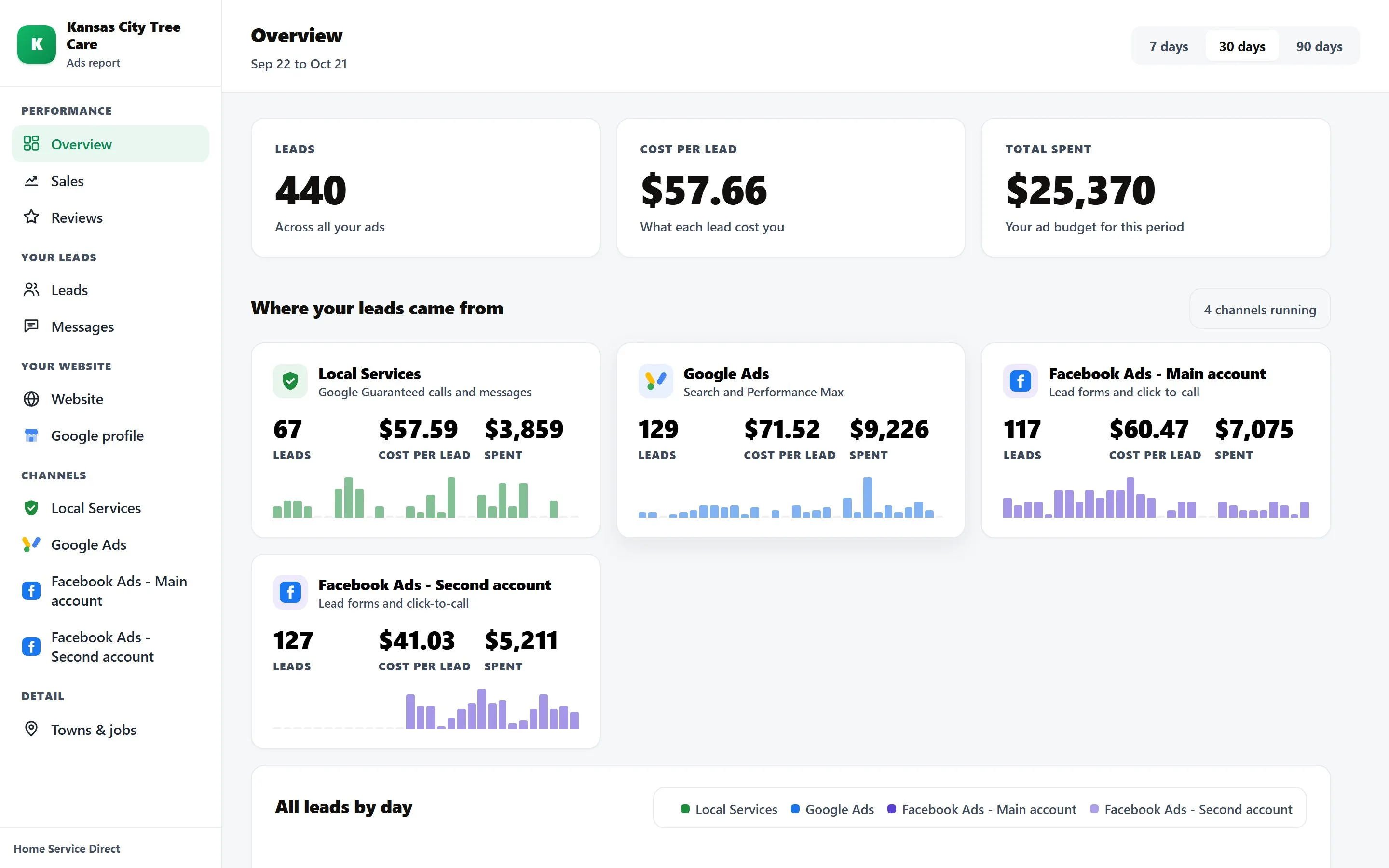
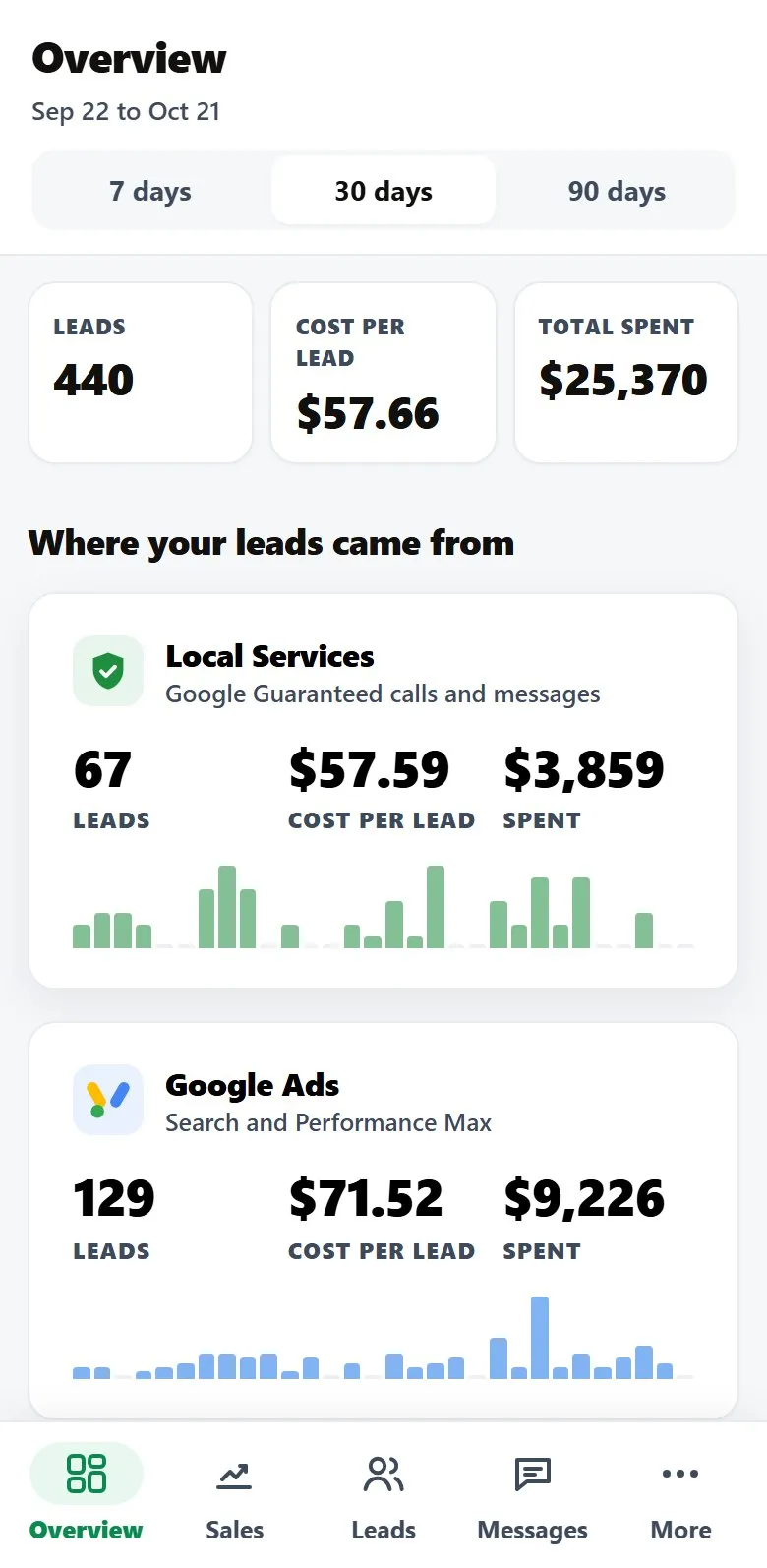
Example dashboard and phone app for a 30-day period. Sample data, shown so you can see the layout.
Search, LSA, SEO, Facebook, YouTube, mail, the website and your review flow. We manage all of it year-round instead of you coordinating five vendors who never compare notes. One team building your reputation in your market.
Paid ads start quickly, while reviews, rankings and name recognition grow the whole time. Someone who watched a clip of your crew in April may phone in October when a seal finally clouds over. Over time, a larger share of your jobs arrive without a per-click charge.
Ad accounts, website, Google listing and reviews all belong to you, and each call shows the channel that produced it. When a full-house job signs, you can trace it to the click that started it. Nothing hidden and nothing held back if you leave.
Swipe through all 3 points
Why work with us
One Marketing Team
That Runs Every Channel for Your Window Company
A window purchase happens maybe once in twenty years. Winning it isn't about one campaign. It's about being the installer a homeowner already pictures the morning their seals cloud or the heating bill spikes. We build that by handling every channel with one team, which leaves you free to focus on sales and installs.
We Market Only Home Service Companies
Home services is our whole business. We know a homeowner with clouded glass or a soft sill is ready now, and one who's "just pricing it out" needs a long, patient follow-up. A general agency treating you like a dental office won't.
All Channels, One Team
Search, LSA, SEO, Facebook, YouTube, mail, your website and reviews, managed by one team that actually talks. No more web person, ad person and mail vendor each blaming the other two when calls slow.
Growth That Builds, Not Rented Clicks
Ads get the phone ringing fast, and meanwhile we're building your reviews, rankings and brand. As months pass, a growing share of consultations start with homeowners who recognized your company before they ever saw an ad.
Win Locally Against the National Brands
The big franchise brands outspend local installers on search every day. Outbidding them isn't the plan. Instead we help you win on the LSA row, fast follow-up, real local reviews and payment options that turn a hometown installer into the obvious pick.
Accounts and Data Stay Yours
Ad accounts, website, Google listing and reviews are registered to you. Every consultation shows its source channel and cost. Walk away someday and everything you built goes with you.
Month to Month, Nothing Hidden
Stay because it works, not because you signed. We don't need a long-term contract, because once homeowners in your area think of you first and your reps are booked weeks out, you won't want to leave.
Swipe through all 6 reasons
The process
A Full Sales Calendar in Three Steps
Each week you run without a plan, big window projects nearby go to whichever company the homeowner already recognized. These steps make that company yours.
Book Your Call
If installers don't have weeks of full-house window and door work lined up, talk to a marketer who understands the trade, the national brands you face, and how homeowners decide.
Leave With a Plan
We study your territory: which franchise brands outspend you, which streets are full of aging homes with original windows, and the channel mix that should keep consultations booked. You hang up with an actual plan rather than a template.
Sign More Installs
We fill your calendar with in-home consultations, grow reviews and rankings in the background, and keep crews booked weeks ahead, so you sign more full-house jobs and become the window company your area already trusts.
Swipe through all 3 steps
Pick a Time for My Callor phone us at (555) 010-0000
FAQ
Window & Door Marketing Questions
What makes window marketing different from general agency work?
A general agency runs one playbook for dentists, law firms and window companies. Window replacement doesn't work that way. Homeowners often research for weeks or months before signing a five-figure job, they want to see your actual installs and some evidence the new units will cut their bills, and you're competing with national brands that outspend you everywhere.
Home services is all we do, so everything is designed around the moment that matters, the in-home consultation with every decision-maker present, and we compete on local trust and proof rather than switching on ads and hoping.
I've tried Facebook or Google ads and got nothing. Why try again?
Nearly always it's how things were set up. Common misses: stock images in place of your own installs, ads shown to anyone in a wide radius rather than owners of older homes with original windows, paid traffic dumped on the homepage when it needed a consultation page, pulling the plug at three weeks before anything settled, and no call tracking to show which ad set the appointment.
Fix those, and channels that "didn't work" often start setting consultations. That's much of what we do for window companies arriving after a bad campaign.
How soon will this marketing pay for itself?
Some channels pay off within days and others build over months, which is the reason to run a full system rather than a single campaign. LSA and search ads can produce calls in week one. Facebook usually needs a few days to settle. SEO, reviews and your Google listing take a few months, then deliver calls with no click fee attached.
Window buyers take longer, so today's click may become a consultation weeks later. We start with the fast channels so appointments come early, then build rankings and reviews underneath so more homeowners arrive already knowing your name.
How do you know which marketing is booking jobs?
Each call and form is traced to its source, which means the click behind a full-house contract is visible rather than guessed. You get a plain weekly read on what set a consultation, its cost, and the neighborhoods producing them, not a report full of impressions and engagement.
If a channel isn't setting consultations, the money moves to one that is. That's the job.
What should a strong month look like?
Once the full system is up and running for an established installer, a good month means a calendar full of qualified consultations with every decision-maker present, crews booked weeks ahead, and a growing share of appointments from homeowners who knew you before they called. The first months are smaller while the system and your brand build.
Appointments that actually sit matter more than raw lead count. A single full-house contract is worth more than a dozen calls from people collecting prices, so the goal is reliable, profitable growth rather than a short burst. Demand lifts in spring and again before winter, and spend leans into those stretches.
My last agency let me down. Why would you be different?
Fair question. Before you commit, we'll walk you through the dashboard, call tracking and monthly report you'd actually get, and show you how we'd set up your account. Judge the work, not the pitch.
There's no long-term contract. Your ad accounts, Google Business Profile, leads and call recordings all belong to you. If we're not delivering, you can leave and take everything with you. We'd rather earn each month than hold you to a contract.
Explore more
More Ways We Market Window & Door Companies
Window & Door Leads
Exclusive window and door appointments that go to you aloneRead moreWindow & Door Google Ads
Paid search placement for buyers pricing new windows and doorsRead moreWindow & Door SEO
Climb Google Maps in the towns you serveRead moreSwipe through all 3 pages
Next step
Ready for a Fuller Sales Calendar?
Spend 15 minutes with us. You'll get a read on how much full-house window and door work is up for grabs near you, which companies you're actually up against, and where your bigger share can come from.
After You Book
We review your territory: the franchise brands you face, what local homeowners search for, and the best neighborhoods for full-house window work.
We walk you through the growth plan: which channels we'd run, how we'd build name recognition, and what the next few months should look like.
Your marketing system goes live and consultations start reaching your calendar. No long contract, and every account stays yours.
How we work: No long contract. Your ad accounts, website and data belong to you, and you can cancel with 30 days' notice.
One 15-minute call. You get a clear plan built for your service area.
Next step: we'll text or call to schedule your 15-minute strategy session.
Window & Door Marketing Measured in Signed Jobs, Not Impressions
Marketing a window and door company isn't one channel. It's several working together. Search ads, social and your map listing earn their keep only when they're managed as one system, and that's what separates real marketing from someone posting on Facebook whenever they remember. Call it window and door advertising or window company marketing: it works only when the channels work together.
Thousands Spent on Marketing Last Year, and No Idea Which Part Paid Off
If you can't name the channel behind your last five full-house jobs, you're not running a system, you're collecting invoices. Most window companies aren't under-marketed. They're scattered: a few Facebook posts, a booth at the spring home show, a site built years ago that nobody updates, and nothing that ties a dollar to a five-figure replacement. This guide covers how to fix that, one owner to another.
Why Window & Door Marketing Leaks Money
The issue is rarely doing too little. It's doing six things partway when three things done completely would win. Posts get boosted when someone remembers, the Google listing has a handful of old photos, a general agency's ads bid on "windows" instead of "full house window replacement", and calls go unanswered at the moment a homeowner wants a measure.
Then there's tracking. Without cost per signed job by channel, each budget decision is guesswork. You keep paying for what feels busy and cut what was quietly setting your biggest replacement appointments. Agencies selling impressions and engagement like it that way, since those figures always look impressive and never tie back to an install on your calendar.
The lesson: three channels done well and fully tracked beat ten channels you can't measure.
The Few Channels That Reliably Book Window & Door Jobs
Forget the long list of ideas. Four or five channels do the heavy lifting when they're managed well and aimed at the right streets and housing stock:
Google Local Service Ads. The badged row that appears first on many local searches. Billed per lead, sent only to you, and the most purchase-ready placement for "window replacement near me". It's where a ready buyer looks first.
Google Search Ads. Reach owners looking up new windows, front doors and sliders, and land each click on a page made for that exact service. Profit comes from bidding up high-ticket searches and excluding junk such as "window washing" and "window film".
Google Business Profile and the map. Much of the local click traffic goes to the map results. A filled-out listing with fresh install photos and steady reviews earns a spot there and strengthens your LSA at the same time.
Facebook and Instagram. This is where interest gets created before anyone searches. Your own install photos and a utility-bill angle shown to owners of aging houses, plus follow-up ads for anyone who was quoted and hasn't decided.
Everything else, home shows, mail, yard signs, truck wraps, canvassing, multiplies that core rather than replacing it. Build the engine, then add the extras.
What Window Marketing Should Cost, and the Price of Going Cheap
There's no single correct figure. Many home improvement companies reinvest a high single-digit to low double-digit share of revenue in marketing, and more when they're adding a crew. Where owners go wrong is looking at what the spend costs instead of what it returns.
A bargain-priced agency is usually the most expensive choice. It recycles one template across windows, dental offices and plumbing, can't tell a full-house replacement from a sash repair, and bills you while your budget goes to clicks that never sign. Cheap marketing doesn't save money. It hands the high-ticket replacements to a competitor running a proper system, frequently a franchise with far more to spend.
Cost Per Booked Job: The One Number That Matters
Likes, impressions and reach don't pay installers. The number that steers a window business is cost per signed job: a channel's spend divided by the contracts it produced. Track that per channel and decisions get easy. Scale what brings full-house replacements and cut what brings one-window repairs two towns away.
It's also the only fair way to compare channels. An LSA lead may carry a higher price than a social lead yet still win on cost per signed job, because the caller is further along. You only see that with call tracking and a unique number per source, which most window companies don't have.
Up Against the National Brands? Win Local.
Franchise window brands can outspend a local installer by a wide margin every single week, and matching them dollar for dollar isn't realistic. Out-localing them is. A homeowner typing "window replacement near me" wants someone nearby, reputable and reachable, which is exactly where franchises fall short: few local reviews, a generic listing, no roots in the community. Show your installs on their streets, collect reviews from their neighbors, have a real person pick up, and the work the big brands miss starts coming to you.
Brand Keeps You Remembered. Lead Gen Gets This Week's Call.
You need both, and most window companies lean too hard on one. Brand work, the truck wrap, the home show booth, the youth sports sponsorship, keeps you top of mind for the homeowner who'll replace windows next year. Lead gen, search ads and LSA, catches the one ready right now. If your calendar has open days this month, fix the lead side first and let brand grow behind it. A nice logo with an empty calendar doesn't pay the crew.
One Connected System Beats Five Separate Vendors
The scattered approach carries a hidden cost: a web developer who doesn't talk to the ad buyer, who never hears from the person managing your Google listing. Leads fall through, nobody owns the outcome, and you end up stitching it together between consultations and installs.
A connected system fixes that. Ads point to landing pages built to convert, each call is tied to its source, reviews lift rankings, and one team owns cost per signed job across everything. That's the gap between marketing that looks busy and marketing that keeps reps booked.
Your Site Either Books Jobs or Just Sits There
Strong ads still lose the contract when the click arrives at a slow, generic site. Plenty of window company websites read like catalogs: a logo, a glossy model-home photo, a row of manufacturer badges, and a form tucked away near the footer. Someone with drafty windows won't read a catalog. They're looking for a number to call, evidence you do good work, and an easy way to schedule a measure.
A site that books jobs loads quickly on a phone, leads with photos of your actual installs and crew, keeps the call button and form in plain view for a ready buyer, and answers what they're really asking: will you handle my windows and doors, and when can someone measure. Paid traffic is wasted on a page designed to look nice rather than to get the call.
Reviews Are Marketing That Decides Who Gets Hired
When a homeowner collects three window quotes, star rating and review count often settle the question of trust before anyone talks numbers. Reviews aren't vanity. They're among the strongest drivers of your position in the map results and the LSA row, and they back up every ad you run. A high rating with a deep review count tends to beat a slightly lower rating with a few dozen, especially against a national brand whose reviews are scattered across many city pages.
Treat review collection as its own channel. The companies that pull ahead make asking routine: a text with the review link goes out the day the crew packs up a clean job, and every review gets a quick reply. It snowballs: reviews lift rankings, rankings bring calls, calls bring reviews. Plenty of installers never build the habit.
If You Don't Own Your Accounts, You're Stuck
Here is a trap many owners only notice when they try to switch. The agency sets up the ad account, Business Profile, call tracking and website in its own name, so when the payments end, the agency keeps all of it. You start over from nothing, and they know that, which is why they never need to work hard for you.
Insist on owning everything from the start: ad accounts, Google listing, website, phone numbers and data. A partner who's confident in the work won't object, since good results are what keep clients, not control of their assets. If an agency refuses to register your accounts in your company's name, you know how the relationship will go.
Seven Moves That Fill a Window Company's Schedule
Window replacement marketing isn't a single promoted post from April. It's several channels running together, so a slow month in one doesn't empty the calendar. Most window companies that stall aren't under-marketing. They're trying channels one by one and calling it a strategy. These seven moves keep putting full-house jobs on the schedule for companies that give them long enough to work.
Google Local Service Ads. The badged row at the top of search, above regular ads and organic results. You pay when a homeowner calls or messages, not when someone clicks and leaves. Owners comparing installers notice the badge before anything else, and on a purchase this large it builds confidence before you say a word. Once verification clears, it's often the quickest channel to switch on when the calendar has open days.
Google Search Ads. People searching "new windows near me" or "price of new windows" are past the research stage and are now picking an installer. A well-built search campaign reaches them at that moment and sends them to a page for that job, not your homepage. Build a page per service, exclude junk like repair, DIY and auto glass from launch, and give every campaign its own call-tracking number so you can see what it signed.
Facebook and Instagram. Search catches people already looking. Social creates the interest. A homeowner scrolling at night isn't thinking about windows until your install on a house a few blocks away shows up next to a believable line about lower heating bills. Target older homes in the right value ranges, use your own job photos, and keep a retargeting list for anyone quoted who hasn't signed.
Map rankings and your Google listing. A large share of searches carry local intent, and on a phone the map results often appear before organic links. A fully built listing with your install photos and steady reviews earns a place there, and leads from it carry no click charge. It takes months, and that's why the installers who began early are the ones on top today.
Reviews. On a purchase this large, trust decides who gets hired, and homeowners measure much of it in stars and review count. A company with a deep, recent review history pulls far more calls from its profile than one with a handful. Ask for a review on install day, reply within 24 hours, and mention the town and the job in your reply so it helps local search too.
Referrals and partnerships. Window work is visible. The whole street sees new windows going in. Pay a referral reward to past customers, get to know realtors and inspectors who point out failing windows at showings, and hang door tags on neighboring homes after every install. Referral leads tend to close best because trust exists before the first call.
Direct mail. Postcards to aging homes on well-chosen streets still produce signed work. An owner in a 30-year-old house with original windows usually knows it and just needs a push, and a card showing one of your own installs provides it. Mail the same list three times over about two months. Repetition drives response, not a single card.
The point: pick three or four from this list and keep them running at once. One channel alone is a gamble. Several together is a real marketing system.
A 90-Day Marketing Plan for Window Companies
Launching everything at once burns through a budget in a quarter and convinces the owner that marketing doesn't work. Phase it. Month one is groundwork: get LSA verified and live, complete every field of the Google Business Profile, switch on automatic review requests after each install, and start a referral program with a real reward. Month two adds speed: launch search ads in your strongest towns, build dedicated landing pages, start Facebook retargeting for visitors who didn't call, and set up two or three realtor partnerships. Month three is the push: run Facebook lead ads to new audiences, send your first mail drop, begin town pages for local SEO, and review ninety days of data to find the channels producing signed contracts, not just clicks.
Five Advertising Mistakes That Drain Window Company Budgets
Relying on shared lead sites as your main source. Marketplaces sell one inquiry to several companies at once. Close rates fall because the homeowner already has other installers calling before you dial. On a five-figure job, that gap is real money leaving every week. Shared leads can fill a gap now and then, but they shouldn't carry the business.
Running stock images in place of real jobs. Someone about to spend five figures wants proof of your workmanship, not a stock image of someone else's living room. Photos from your own installs usually beat stock imagery in both ads and landing pages. Every finished job is marketing material, so photograph it before the crew leaves.
Quitting after a month. Search needs volume before bidding settles, social targeting takes several weeks to learn, and SEO needs months. Pull the plug after one quiet month and you've paid for the learning period and left just before it paid off. Give a channel about ninety days before judging it.
Not tracking which channel signs the job. Without knowing which ad produced which call, next month's budget is a guess, and guesses usually go wrong. Give each channel its own tracked phone number, then grade them on contracts signed, not clicks or flattering report numbers.
Hiring a general agency that also serves dentists and restaurants. They won't know your season, how homeowners weigh competing bids over a month or more, or why an older house makes the best mail target. A partner focused on home services understands the full-house sales cycle from first click to signed contract.
Window and door marketing, window company advertising, digital marketing for installers: the scoreboard doesn't change. It's a full calendar, not vanity metrics. A marketing company that can't connect spend to signed work isn't worth the fee.
Home service companies are the only clients we serve. We build the whole system, ads, landing pages, Google listing, reviews and call tracking, and manage it to one number: signed window and door jobs. Every lead is tracked, the accounts are yours, and there's no long contract. If marketing keeps you busy but the calendar still has gaps, that's what we fix.
Build My Window Marketing Plan
One marketing team for home service contractors: ads, SEO, websites and reviews.
Services
Explore
Get in Touch
Ready for Window Marketing That Signs Contracts?
Give us 15 minutes and we'll lay out how we'd load your calendar with full-house window consultations and compete with the national brands in your town. No pressure, no long contract.